Remote working isn’t a new thing, but it has grown since the pandemic. Many businesses have embraced remote or hybrid working. This offers more flexibility, boosts productivity and work-life balance. It can cut costs for both employees and employers and allows organisation to tap into a global talent pool. Despite the benefits, effective communication and the right kit are crucial for success. Here’s our list of great kit every remote worker needs in 2026 – and ALL with a European heritage!
Portable Keyboard
Laptop Riser
Headphones
Wireless Chargers
Bags
Of course, it’s not always possible, practical or affordable to buy absolutely everything, which is why we also rent key equipment such as headphones, monitors, keyboards and laptop risers. And because we like to be as European as possible, we try and source kit which has a ‘close to home’ heritage.
Portable Keyboard
If you’re working from a laptop, it’s important to ensure you are sitting comfortably in order to make the most of your working day. This includes having your body in the right position such as relaxed shoulders, wrists and forearms inline. You should also have your monitor in the right position to avoid neck pain and eye strain. To achieve this, you may find you need to use a laptop risers (see below), but if you do this, then your keyboard will be in the wrong position. This is where portable keyboards come in very handy.
There are many types of portable keyboards depending on the work you do. Some are compact and ideal for carrying around with you, some are split which are often better for those with wrist pain or limited movements and some have mechanical keys which are better if you do a lot of typing. Two recommendations are from Logitech.
Logitech is genuinely a European company, though with a transatlantic dimension.
It was founded in 1981 in Apples, Vaud, Switzerland by Daniel Borel, Pierluigi Zappacosta, and Giacomo Marini. The company is headquartered in Lausanne, Switzerland and is listed on the SIX Swiss Exchange.
So it’s Swiss at its roots and corporate heart — but it has had a significant US presence since the early days, which is why it can sometimes feel like an American brand.
Like virtually every consumer electronics company, Logitech’s actual manufacturing takes place in Asia — primarily China. So the design, engineering, and corporate leadership is European, but the physical products aren’t made in Europe.
For the purposes of buying European, Logitech is one of the better choices in the peripherals space — genuinely Swiss-founded and headquartered.
Logitech Pebble Keys 2 (K380s) — compact, light, connects to three devices via Bluetooth with easy one-button switching, and features the same grippy, comfortable matte coating on the keys as the premium MX Keys Runs on AAA batteries with exceptional longevity. Around £40–£50 and widely available at John Lewis, and Currys.
With a backlight: Logitech Keys-To-Go 2 — Logitech’s most portable keyboard, designed for tablets, mobile devices, and laptops, with multi-OS compatibility and Easy-Switch functionality for seamless switching across multiple devices. Ultra-slim, almost tablet-cover thin. Good if you frequently work from an iPad or phone as well as a laptop.
Laptop Riser
As mentioned above, to avoid neck strain, you’re supposed to keep the top of your monitor around eye level. This can be tricky if you’re working on a laptop all the time, but fortunately there is a whole range of portable laptop risers that can really save your neck. Many of these can fold down flat so they are easy to carry about with you, but others are handy if you need a more permanent solution.
And Logitech make one that’s highly recommended – the Casa Pop Up Desk is also portable!
Headphones
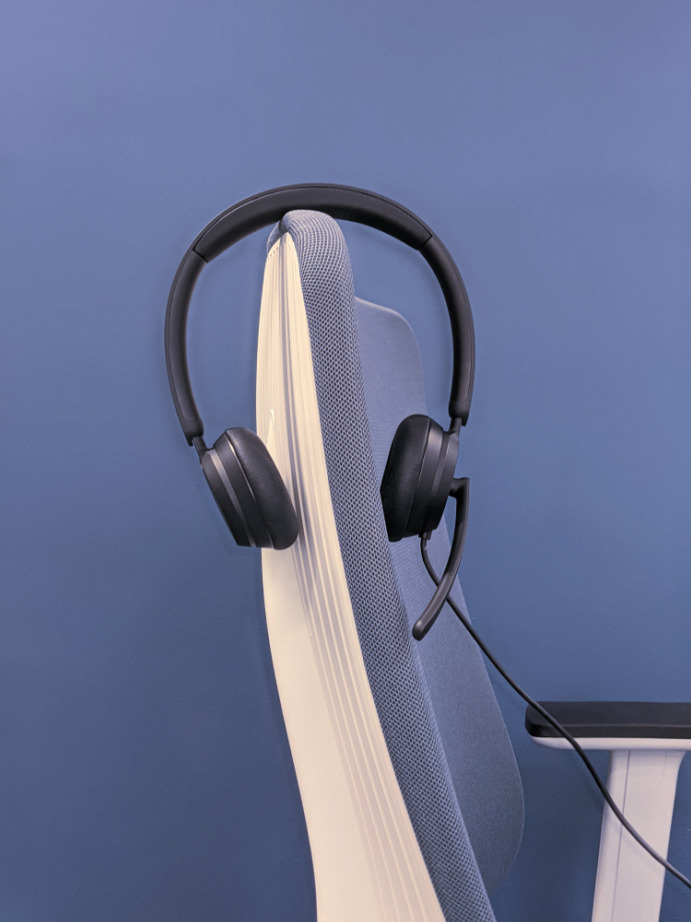
Headphones are essential if you’re working in a coworking space, shared office or coffee shop. Not only for when you’re taking or making calls, but also for concentration and productivity. Now obviously everyone has different requirements for headphones and fortunately there are plenty of different types to choose from. However, pursuing the idea of choosing as locally as possible, we have Jabra,
Jabra is a brand owned by GN Audio, which is part of GN Group — a Danish company founded in 1869 (originally as the Great Northern Telegraph Company). It’s headquartered in Ballerup, near Copenhagen, and listed on the Nasdaq Copenhagen exchange.
Jabra’s products are designed and engineered in Denmark. The company has a strong R&D presence in Copenhagen and is well regarded in professional audio circles across Europe. Like virtually all headset brands, physical manufacturing takes place in Asia.
Why they’re worth choosing for remote work:
Their Evolve series is specifically designed for professional communication rather than consumer listening — noise-cancelling microphones optimised for voice clarity on calls, not just music
Strong enterprise reputation across European businesses
Excellent UK and European warranty and support infrastructure
The Evolve2 55 and Evolve2 65 are the two standout models for remote workers — both widely available from Jabra’s own UK site, and business technology retailers like Insight and Misco.
Wireless Chargers
If you want genuinely European-made power accessories, it’s essentially impossible at a consumer level. The entire charger and power bank supply chain (cells, PCBs, USB controllers) is based in Asia. The best you can do is choose European-designed and headquartered brands like Allocacoc, DELTACO, or Hama.
Allocacoc PowerCube — Dutch design The standout European option. Designed in the Netherlands, the PowerCube replaces the traditional power strip with a compact cube format that works particularly well with UK and European sockets — no awkward plug blocking. Available at Argos, and independent retailers for around £25–£35. The Extended USB model adds USB-A and USB-C ports alongside the mains sockets.
Allocacoc PowerBar — same brand A slimmer strip version for those who prefer a more traditional form factor, but with the same Dutch design sensibility and compact build. Good for travel.
DELTACO — Swedish brand A Swedish electronics accessories brand with strong distribution across Scandinavia and the UK. They produce USB-C chargers, cables, hubs, and surge-protected extension leads. Less well known in the UK but worth seeking out. Solid build quality and genuinely Scandinavian-headquartered.
Hama — German brand Founded in Monheim, Bavaria in 1925. One of Europe’s largest accessories manufacturers, producing chargers, cables, hubs, and power banks. Available at Currys, often at competitive prices. German-headquartered with a long European manufacturing history, though again production is now largely in Asia.
Bag
If you’re moving around from home to the office to meetings to site visits etc, you’ll need a solid bag that can hold everything you need, plus be comfortable, secure and protective. Since the rise of hybrid working, we’ve seen more stylish bags and bags offering a bit more function as well, such as bags with more compartments, bags with extra padding, bags with USB ports and so much more.
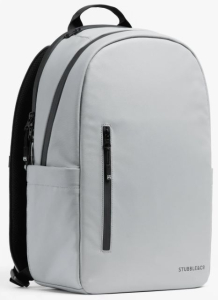
Stubble & Co. is a UK-based bag and backpack company on a mission to make the perfect all-rounder bag, with all bags designed in London. Ergopro They have a strong sustainability ethos — the company is B-Corp Certified, a member of 1% for the Planet, and committed to eliminating carbon emissions and climate neutrality.
Three models worth considering for remote workers:
The Roll Top (20L or 30L) — the most popular model. Comfortable, weatherproof, offers plenty of storage, and uses recycled PET materials throughout the lining and main compartment — essentially plastic bottles repurposed into fabric. ProtoArc The laptop compartment is generously padded. Around £115–£130.
The Everyday Backpack (20L) — a sleek 20-litre solution with a dedicated laptop compartment, two external zipper pockets, expandable water bottle pockets, and a trolley sleeve — making it particularly well suited to city-hopping and airport travel. Remote Turtle Around £115.
The Hybrid 30L — designed for commuting and short trips, with a dedicated padded laptop compartment, pockets for earbuds, wallet, travel tickets and phone, weatherproof bound seams, and carry-on compliance.
Customer reviews across 600+ Trustpilot responses are overwhelmingly positive, with particular praise for the customer service — the brand offers free replacements for faulty zips and seems to resolve issues without pushback.
For a remote worker based in the UK wanting a well-designed, British-brand bag with genuine sustainability credentials, Stubble & Co is the good recommendation in this category by some margin. Available direct from their website with free UK delivery.
We have been Dog Friendly on a Friday for a while now. Why?
Well, we like dogs (that’s our director’s dog, Buddy, to the right ) and lockdown stimulated a lot of new dog owners and we have been responding to demand.
Every Friday, humans can buy a day pass which entitles them and their dog to work in The Racquets Court.
We do have some rules:
be friendly – good boys and girls only please!
be respectful – since we are a workspace, dogs (and their owners) are reminded to stay together and be mindful about what each other are doing
be clean – keep the space nice for other users and clean up after yourselves
be calm – barking or hyper dogs are not good for productivity
According to Dogs’ Trust, dogs shouldn’t be left alone for more than four hours. Now obviously, not all dogs are the same, but as a general rule of thumb, it does make sense. A dog left alone for too long can struggle with separation anxiety which can lead to injury to themselves and household destruction, which no one wants.
On the flipside, working from home full time does give your dog the social interaction they crave, but is it the right option for you?
Bringing your dog into the office can have many benefits.
It’s cheaper
69% of dog owners underestimated the cost of owning a dog according to Paws and Presto. Providing your dog doesn’t trash the office, having them with you during the day can actually save you money.
If you choose to leave your dog at home, there are various things to consider which can end up costing you money such as:
Do you leave the heating on for them?
Do you have to leave the radio or TV on for them?
Do they have access to enough food & water?
Are they in a part of the house where they will a) feel comfortable and b) cause the least amount of damage?
Will they need to relieve themselves while you’re out?
One option is to hire a dog walker to pop in while you’re out. The average cost for this is hight if you’re doing this multiple times a week. Another option is doggy day care which can range from £20-£30 per day.
As we all know, all dogs are different, so there isn’t a one-size-fits-all solution. Some dogs aren’t office dogs. As someone who has had several dogs in my lifetime, one or two of mine certainly wouldn’t have been happy in the office and others would have been perfectly suited.
It improves morale & reduces stress
Studies have shown that when owners are allowed to bring their dog into the office, morale improves. Leaving dogs at home can cause stress for the animal, but can also cause stress for the owner. Often they are worrying about their pet, having to rush home at lunch time or the end of the day to walk them, worrying about the cost of day care, worrying about the dog being lonely and/or damaging their home. And lets face it, dogs can also be really funny. Having dogs in the workplace can lighten the mood which helps create a more relaxed atmosphere AND can increase oxytocin levels which is the hormone that reduces stress.
It helps with staff retention
According to a recent study by Julie Naismith, the UK leading dog separation anxiety expert and author, 54% of people said they would consider quitting their jobs if their employers banned their dog from the workplace. Employees are less likely to look for new jobs if they are happy and secure in their current one. We’ve already talked about how having dogs around can reduce stress and improve morale so this is a good way to ensure you are looking out for their best interests and listening to their concerns about their pets being left alone.
Newcastle is also a very dog friendly city so there are plenty of places you can go after work for team outings and encourage your team to bring their pooch along. Check out this guide to dog friendly places to eat.
Improves productivity
Many of us end up skipping breaks because we feel the building pressure to complete tasks, however this is counter productive. Skipping breaks can lead to burnout and creates a negative atmosphere. According to Michigan State University, breaks can improve focus and productivity which, in the end, results in increased job satisfaction.
We also know that taking a walk outside is a great way to improve your physical and mental health. This allows you to get some fresh air, burn calories, strengthen your heart, boost energy, boosts your mood and has so many other health benefits. Having your dog with you in the office will help remind you to take these vital breaks as you’re more likely to take them if your dog is also showing signs of needing to go out.
Makes life easier
Putting it simply, being able to bring your dog to the office with you just makes life much easier. Even if you don’t intend to do it all the time, or if you suddenly have a change in circumstances that means no one will be able to walk your dog that day, having the option to bring your dog with you is a weight off your mind. The above study showed that 42% of pet owners have called in sick to take care of their pets, so lets remove the barriers.
You know your dog is safe, happy and you’ll be able to get your work done. It’s a win-win!
Improves relationships
62% of households in the UK have pets. They are a huge part of our society and give feelings happiness and companionship for owners. We bond over our pets: past, present and future. Personally I know people are far more likely to talk to me if I’m with my dog than they would otherwise. The same is true in the office. In places like Coworking spaces, having your pet with you can be a massive ice-breaker and help you expand your network and contacts, purely through the initial interaction over your dog.
What about the downsides?
Well, we have to be fair here, there are downsides of having dogs in the office as well. Dogs can cause damage, people can be frightened of dogs or allergic to them. This is why we have opted to have one dedicated, dog friendly day per week. This allows those who don’t want to be around dogs to have space away from them and allows us to deep clean after Thank Dog It’s Friday so that The Racquets Court is pristine again ready for Monday. We also have a number of measures in place to make sure we are taking care of both the humans and the dogs in the workspace which will be reviewed regularly. And obviously, we are relying on you to do your part as well by:
Respecting the rules we have in place
Only bringing dogs in on TDIF
Respecting your co-workers and other members in the building and their preferences
Ensuring you have brought the items your dog needs to have a peaceful day in the office
Take full responsibility for your own dog
If you do have any concerns, you can speak to a member of our team here
If you’d like to buy a day pass for Thank Dog It’s Friday, click the button below and purchase your day pass. Once you have your pass, you can select any Friday to redeem it and simply check your pass in!
Lunch time can be repetitive. Either you’ve found a few simple recipes that you use on rotation or you end up scooping up last nights left overs. But if you’re lucky enough to work somewhere with a full kitchen (like your own house or, I don’t know, The Racquets Court), why not take full advantage of the facilities and elevate your lunch at the same time?
Since we are located just a few minutes away from a Tesco Extra, a Sainsbury’s Local and M&S Food Hall, it’s easy to grab some ingredients and whip up some delicious meals in your lunch break.
Here are some of our favourite lunch recipes submitted by our customers. Click on the title of each entry to see the full recipe, we’ve just summarised or added our suggestions for adaptations on here.
With this you can’t go wrong. It’s light, it’s veggie, it’s quick and it’s tasty! Plus…cheese.
Lightly cook some halloumi strips (fry or grill), heat your tortilla wrap, spread hummus on the wrap, top with salad and halloumi, add a sauce of your choice, roll up and it’s ready! Takes just a few minutes to cook and you can customise it however you like.
While this recipe does call for homemade pesto (which really does elevate the whole dish), if you don’t have time to make this from scratch, you can use shop bought pesto. Homemade pesto doesn’t take long to make, it’s basically toasted pine nuts with garlic, basil, parmesan, lemon and salt all mixed together. It does require using a food processor to get the consistency right. Regardless, whether you make the pesto from scratch or use a nice shop bought one, it’s down to personal preference.
Simply cook your pasta, add in pesto and whatever other veggies you like. I’ve made this with tomatoes and lettuce but, hey, it’s your lunch!
Okay, here me out. Stuffed peppers do take a canny while to cook, but you can prep them before you come in and just remember to pop them in the oven so they’re ready when your ready.
Think of the pepper as an edible bowl. Add rice or couscous, whatever toppings you like and a sprinkle of cheese and you’re good to go. It takes around half an hour to cook in the oven so just make sure you get them in the oven before you start your break.
I don’t have a proper recipe for this one as it’s something I made by accident. I was trying to make a Spanakopita but I accidentally bought puff pastry instead of filo so I had to improvise.
Spanakopita is a Greek Pie and is delicious. I basically followed this recipe but had to make some changes. I unrolled my puff pasty, put on a baking tray and slice 6 even rectangles. I brushed the whole thing with the sun-dried tomato oil and added the spinach mixture in the middle of each rectangle leaving a small edge free as a crust. Bake in the oven for around 20-30 minutes until golden then dish up. It’s really easy to eat on the go, at your desk or enjoy leisurely while pretending you’re actually in Greece. The whole thing takes just 10 minutes to prep so you could do it at home before you come in and finish in the oven.
You can’t go wrong with a Caesar salad. You can keep this one simple or embellish it however you like, but it’s quick and easy and, most importantly, tasty. Scale it up if you’re cooking for the team or scale down if you’re cooking for you. Sometimes I make extra so I’ve got lunch sorted for the next day.
Cook your pasta, cook your seasoned chicken, add both in a bowl with all your salady bits, add your Caesar dressing. I add my croutons on the top as I like the super crunch but you do you.
So this recipe is a no-cook version which is handy if you’re tight on time, but if you do have the time, you can marinade and cook your chicken to your own liking. If you don’t have time, the whole thing takes about 10 minutes to make and less to eat (because it’s so tasty).
You need microwave rice (okay so it needs a little bit of cooking), tinned sweetcorn, tinned black beans, chicken (pre-cooked), avocado, salsa and limes. Heat your rice, drain the sweetcorn and beans and assemble everything in a bowl, topping it off with a squeeze of lime. Again, you can customise this dish however you like, omit or add bits and pieces, make it your own.
Yes that’s right, the famous Costa Ham & Cheese Toastie can be made at home (or in the office). Brilliant for colder days when you really don’t want to bundle up and head out. Warm your hands and your tummy.
Grab 2 slices of bread, smear both with melted butter, cover the top of one slice with grated cheese, assemble sandwich (cheesy bread on top), whack in the oven for about 10 minutes and enjoy! Top tip, let it sit for a minute or 2 once you bring it out the oven otherwise you’ll have hot melty cheese on your chin on your first bite.
It’s like pizza on the go. And, just like pizza, you can add pretty much any topping you like. Use whatever veg you have left in the fridge and whatever meat you have to hand. It’s so simple and takes around 8 minutes to make. Great for warming you up on a cold day or eating cold on a hot day.
Spread tomato puree on top of your pita bread, add whatever toppings you have in whatever order you like. Sprinkle cheese on top and whack in the oven. Wait until the cheese is all melty and golden. Once eaten, go back and make another, then you might be asked to make one for your colleagues and before you know it, you’ve got a good side hustle.
I know, I know, what sort of monster cooks fish at work, but hear me out. This works here because our kitchen is completely separate from the main coworking space meaning those cooking smells don’t waft over everyone. Plus we have doors in the kitchen leading to our outside space which we leave open on nice sunny days.
So, go and buy fish fingers of your choice. Go fancy or simple. Cook in the oven until golden brown. Butter your bread, add a layer of tartare sauce, add lettuce, parsley and your fish fingers. Add more tartare sauce and some chopped up gherkins and finally the top slice of bread.
Funny story, my son when he was about 2 tried tortellini and absolutely loved it, but he misheard (or made up) the name and now it will forever be known as Dalia in my house.
Anyways, this dish is deal for quick and easy office lunch. Add shop bought tortellini to boiling water and cook for about 2 minutes. In another pan, add oil and cook the tomatoes. When pasta is cooked, save a bit of the water and add both to the tomatoes. Add some parmesan and parsley, season and you’re good to go. Another dish that can be customised to your taste and can use up whatever you have left in the fridge.
To be honest, when you’ve got access to an oven and hob, you can really expand your lunch repertoire . Long gone are the days of soggy salads or room temperature sarnies. And best of all, when the shops are just around the corner you really can make just about anything. We will often all chip money in together to buy ingredients and take turns at making lunch for the team. It’s a fun and inexpensive way to do some team building. Fun fact, when we first got the keys to our building, the directors cooked a full Christmas dinner for us!
It is said that the kitchen is the heart of the home, and for a very good reason. It’s the place the family come to cook, to make a brew, to eat. It’s a place to share recipes and ideas, be creative and make something everyone can enjoy. The kitchen here is just one of the brilliant features that stands us apart from the market.
Grabbing your laptop and working from a coffee shop sounds like the perfect solution when working from home becomes impossible. But is it really the most cost effective and productive environment?
Coworking spaces often let you book in by the hour and include refreshments, ergonomic workspaces and a focused environment. We have some top tips for being productive in a coworking space helping you make the most of your time.
1. Find a space that aligns with your goals
Most coworking spaces have unique selling points. Figuring out what helps you tick can really help you find a space that suits you. If it’s important to you to make connections, you want to look for a space that focuses on networking and socializing. Some spaces have weekly or monthly get togethers for members, some host networking events or knowledge shares. You can often find these on the company website. If you are looking for somewhere that aligns with your ethical and sustainable efforts, then look for a space that if working towards or has a BCorp certification or similar efforts on their website. Don’t be shy to ask questions, most spaces are always happy to share the work they do.
2. Bring headphones
It sounds so simple, but it makes a huge difference. Headphones. If you’re taking or making calls during the day, these are a must have. Not only for your benefit, but it also helps you be a good neighbour. You can also use these if you use music to help you focus or if you’re working on any video editing. But if you forget, don’t panic! Lots of spaces also let you hire or borrow equipment such as monitors, headphones, keyboards etc.
3. Make a plan for the day
Of course, making a plan for the day can help you complete certain tasks and you can do this with a task management software such as Trello, or you can use a digital notebook (or even a paper notebook if you’re old school). But if not, just blocking out times in your calendar, scheduling your calls and fitting in time to recharge throughout the day can really help you stay focused.
4. Take regular breaks
Reward yourself for staying on task with regular breaks. Even if it’s just enough time to brew a cup of tea or take a walk. Explore the area around your space, find some hidden gem lunch spots or sun traps. Make use of the breakout spaces and kitchen areas. Do some light stretching and stretch your legs regularly.
5. Make the most of collaboration spaces and meeting rooms
Need to make private calls? Working on projects collaboratively or sharing knowledge? Make the most of the facilities available to you. Get in the habit of booking out meeting rooms when you need them or using the whiteboards. Don’t feel restricted to your desk. This is especially true if you’re working in the space with a team or a colleague. Be respectful to other people in the space by tidying up after yourself as well.
6. Don’t get your chargers!
We all know that feeling when you finally get settled somewhere and see the dreaded warning of low battery. Make sure you have your phone charger, laptop charger, headphone charger, or any other charger you use close to hand. I even carry a charged power bank with me just in case.
Looking to make the most of coworking? Have a look at our membership options starting from as little as £75.00+VAT per month. If you want something bespoke, get in touch with our team to find out more.
In celebration of our 5th birthday, we would like to share the story of The Racquets Court with you in 5(ish) minutes.
In 2017 Gavurin, our data company in the North East of England decided that, with promising growth, there was an opportunity to purchase a building of its very own. Various options were available: one based on the Gateshead side of the swing bridge, one an old library on Scotswood Road. Yet, it was a former sports court in Newcastle city centre that really captured the imagination. The old building, which had stood empty for many years, was perfect.
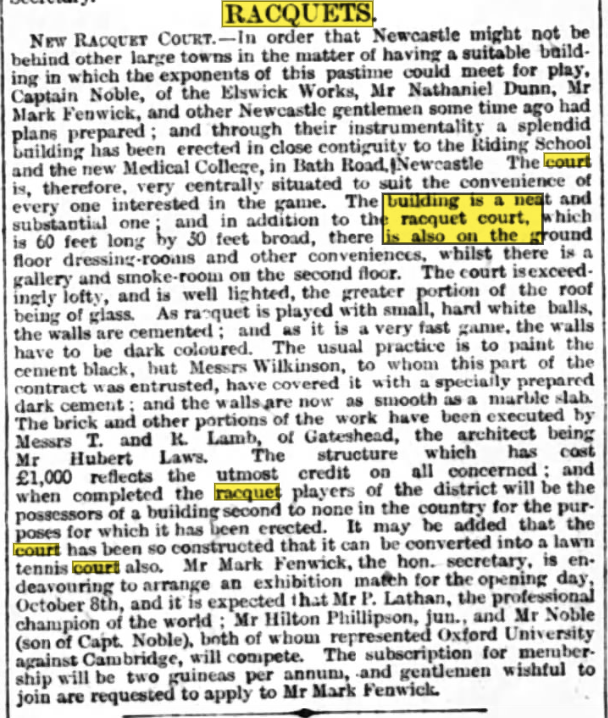
Newcastle’s racquets court was originally built in 1888 “in order that Newcastle might not be behind other large towns”, the building was a haven for racquet enthusiasts, requiring a mere two guineas for membership (this is around £210 today – according to the Bank of England’s inflation calculator).
How to play Racquets Racquets (rackets) was played in a 30-by-60 foot enclosed court, with a ceiling at least 30 feet high. The walls and floor of the court are made of smooth stone and generally dark in colour to contrast with the white ball. Read more
Players used a 30.5 inch wooden racket (bat). The ball must touch the front wall above a 26.5 inch high wooden board before touching the floor. The ball may touch the side wall before reaching the front wall. The other player must play the ball on the volley or after one bounce on the floor. Because the game is played so quickly and the ball was hard, the game was potentially dangerous. Leaving the court could mean forfeiting the match so players kept spare racquets, shifts and shoes with them. The game is often confused with squash, which began as an offshoot of racquets, with a similar manner of play and rules. However, the rules of squash have evolved over the years. One of the few differences between racquets then and now is players are now allowed brief rest periods between games.Read less
The subsequent chapters of the buildings history remain elusive, marked only by a sign stating ‘Northumberland Table Tennis Club’.
When we acquired the building from Newcastle City Council, it stood as little more than a cavernous shell. There was a small viewing platform, the beautiful spiral staircase, a striking glass ceiling, and basic amenities constituted it’s humble inventory. Undeterred our vision became clear – to create a beautiful workspace which combines state-of-the-art technology, housed in a truly unique and historical venue.
Preserving the buildings history proved both challenging and rewarding. The original brickwork, the staircase, the weathered walls bearing the scars of countless racquetball impacts – all bore witness to a bygone era.
The ceiling had to be modernised, reinforced and the old panes of glass replaced. We even added in self-opening panels. The staircase, while stunning, didn’t comply with modern building regulations, so was carefully repaired and relocated within the building and now used as a stunning ornamental feature adorned with a variety of plants (and decorated at Christmas).
We added a small extension to house the entrance area, main staircase, essential amenities, and a cosy private office complimented by a rooftop terrace. The newly added first floor became home to a number of work and meeting spaces.
Throughout the process, our data company evolved and our vision for the building grew. We saw potential in the space and knew we could now share this with likeminded organisations. Thus, The Racquets Court, the coworking space, was born – a hub for innovation and collaboration.
In May 2019 it was finally time to open our doors as we held our launch event. Officially opened by Nick Forbes, then leader of Newcastle City Council, and attended by local businesses, NE1, Newcastle & Northumbria Universities. We also welcomed the contractors who had so efficiently delivered the project –IDP (our architects), Elliott Associates (our quantity surveyors) and Tolent (our building contractors). Tolent very sadly is no longer around – a very significant loss to the North East business community.
“Newcastle was home to the first industrial revolution and we need to be a part of the next industrial revolution too. What you’re achieving here is, I hope, a part of a bigger narrative for the rebirth and regeneration of Newcastle as a major global city. The transformation if this building symbolizes the rebirth and regeneration of Newcastle.” – Nick Forbes
With such a promising start, no one could have foreseen what came next. The world was changing and in the March of 2020 we, like everyone else, went into lockdown. Being a new, small, independent business, the pandemic hit us hard, but we made it through. The world on the other side had changed – a world now driven by the flexibility of remote work, where coworking spaces flourished in the wake of traditional office lets.
With more and more businesses prioritising the wellbeing of their staff and the use of hybrid and flexible working as a recruitment and retention tool, the rise of coworking space has seen our space flourish.
The award recognises The Racquets Court’s commitment to providing unparalleled coworking solutions, including coworking day passes, memberships, and meeting room hire. With a distinctive focus on sustainability and ethics, The Racquets Court goes beyond the conventional to offer a professional workspace that seamlessly integrates luxury interior, state-of-the-art technology, and an unwavering emphasis on security.
The Racquets Court – Newcastle
“We are honoured to receive the Best Coworking Space Enterprise award from SME News,” said Bex Cutts, Community & Operations Manager “This award is a testament to our dedication to creating a workspace that not only meets the professional needs of our members but also reflects our values of sustainability, ethics, and security.”
The Racquets Court stands out in the competitive coworking landscape by offering state-of-the-art facilities, flexible workspace options, and a supportive community that empowers individuals and businesses to thrive. The company’s commitment to providing top-notch amenities, personalised services, and a collaborative atmosphere has set it apart as a leader in the industry.
SME News, a respected platform dedicated to celebrating the success and innovation of small and medium-sized enterprises, carefully evaluates nominees based on various criteria, including innovation, client satisfaction, business growth, and overall excellence.
Receiving the Best Coworking Space Enterprise award affirms The Racquets Court’s position as a trailblazer in the coworking industry and showcases its dedication to creating an exceptional workspace experience for professionals in Newcastle upon Tyne.
The Racquets Court extends its gratitude to SME News, its valued members, and the entire community for their ongoing support. This recognition serves as motivation to continue striving for excellence and to enhance the coworking experience for all.
For more information about The Racquets Court and its award-winning coworking solutions, please get in touch
Unlimited refreshments included for all bookings.
About The Racquets Court: The Racquets Court is an independently owned and ran coworking space in Newcastle city centre. This leading flexible workspace provider offers pay-as-you-go access along with coworking day passes, memberships, and meeting room hire. With a keen focus on sustainability, ethics, luxury interior, and state-of-the-art technology, The Racquets Court provides a professional and secure workspace environment for individuals and businesses.
About SME News: SME News is a platform dedicated to recognising and celebrating the achievements of small and medium-sized enterprises across various industries. Through awards and publications, SME News highlights businesses that demonstrate excellence, innovation, and a commitment to success.
Back in 2022 we released a list of the best lunch spots in Newcastle as voted for by our members, and we’re here to do it again.
One of the best things about being based in the city centre is the fantastic range of food places just a few minutes walk away. While sometimes you just can’t beat a supermarket meal deal for scranning on the go, having the option to go big, try something new or just treat yourself is exactly what you need.
DoughDaze is one of our neighbours! Only a 2 minute walk from our front door, you can have New York style pizza by the slice or whole. With slices from only £2 this the perfect place to find pizza on the go. Their range includes a veggie and vegan pizza as well as standards such as pepperoni, buffalo chicken and more.
Literally next door to DoughDaze, The Little Dumpling House is favourite of mine. Handmade, authentic dumplings available to sit in or take out. Their menu includes dumplings, bao and Chinese burgers.
Open Monday to Saturday 10am-8pm & Sunday 11am-6pm.
Newcastle’s first independent burrito bar and a trusted brand. Zapatista has a whole range of build your own burritos, fajitas, naked bowls, nachos and so much more. Again, just a 2 minute walk from our own front door!
Open Monday to Saturday 11am – 8pm & Sunday 11:30am – 7pm
Sustainable, healthy & delicious! They’ve named themselves “The Rolls-Rice of Japanese Food” and we have to agree. They began in 2013 with the store on Northumberland Street and have grown ever since.. They offer mixed box sets, long box sets and rice bowls to name a few.
Open Monday to Saturday 10:30am – 8pm & Sunday 11am – 8pm
Another repeat entry on our list, but again, we can’t deny how good Kato is. This pan Asian restaurant offers sit in and takeaway with a gorgeous range of rice boxes, noodle boxes, vegan and veggie options.
Coming over from the USA, everyone knows that Five Guys do good burgers. With burgers, beef dogs and sandwiches on the menu, they’re great for visiting on your lunch break or with your colleagues to unwind.
Offering real Italian food from pizza to pasta to paninis. Located less than a 2 minute walk from us, this is a great place for team lunches or after work food.
Their healthy and nutritious Poké Bowls are made fresh to order. Every. Single. Time. Whether you grab one of their house recipes, or build your own, you can always guarantee your taste buds will be satisfied.
You can’t be from the North East and not long a Greggs. Fortunately in Newcastle city centre alone there are 10 Greggs branches and many more across the rest of the region. Festive bake season is nearly upon us as well so best get ready!
*none of the pictures in this blog are from the restaurants mentioned.
Hybrid working allows employees to enjoy the benefits of both working from home and working in the office. Since the year 2020, we’ve seen a massive increase in this way of working. It was traditionally favoured by smaller tech companies but is now popular across a huge range of industries.
Switching to this model of working is hugely beneficial to both employers and employees and we are going to look at some of the pros and cons, as well as different types of hybrid working.
Pros of home working
Work-life balance – Working from home, at least part of the week, helps employees improve their work-life balance. From receiving parcels to being around for tradespeople, working from home gives employees more freedom to arrange things around important work tasks. Lack of commute – Without the stress, cost and time spent commuting to and from work, employees are less stressed when they begin work and make better use of their time. Freedom – Employees have more freedom to choose when and where they work. Productivity – Without the pressures that can come with traditional ways of working, employees say they feel more productive.
Cons of home working
Access to work resources – They may be small fry, but they do add up. Tea, coffee, notebooks, heating, electricity, office chairs etc. Team collaboration & culture – Both are hard to achieve without physically being in the same space and require a bit more effort when managed remotely. Disruption – It can be tempting to pop a load of washing in or mow the lawn on your lunch break but it’s important to remain disciplined. Work processes can also be disrupted by not being able to pop over and speak to someone face to face. Work schedules – With individual freedom also comes difficulty to coordinate schedules.
Pros of office working
Belonging & relationships – working in the office can foster a sense of belonging. You have comradery with your colleagues and can build meaningful connections more easily. Productivity – I know, we mentioned this in the home working list, but for some, working in the office is a more focused environment and helps people switch into ‘work mode’. Onboarding – Onboarding new team members can be much easier in an office environment. They get to know the team faster, know who to speak to and you can oversee how they are settling in much easier. Collaboration – Physically being in the same space as others helps promote collaboration
Cons of office working
Inflexible – When you’re in the office there is more of a requirement to conform to a standard timetable. Commute – This one cannot be ignored. For some, the daily commute can be stressful, expensive and long. Exposure to illness – Now a few years ago, we probably wouldn’t have given this that much thought, but since COVID we know how quickly and easily viral infections can spread in an office space or on the bus/train. Conformity – From the way you dress, to what you eat, to how you perform certain tasks, you’re far more likely to feel the need to conform in the office which might dampen your creativity.
So we can see from the above that there are definitely some benefits to a combination of homework and office work.
Types of Hybrid Working
If you’re introducing hybrid working, there are a few different ways you can do this. It’s important to find a way that benefits your employees and your business without impacting your customers.
At-Will Working
This way of hybrid working allows employees to make the decision based on their own individual needs and wants. Those who work best in the office, they have a space to do so. Those who work best at home, don’t feel pressured to come in. This really is an employee focussed model and it sounds like an ideal setup, but there are definitely some drawbacks. Not knowing where people are going to be from day to day can cause confusion and a feeling of disorganisation. Your office can either feel overcrowded or under-utilised which can be expensive for organisations and demotivating for employees. On the plus side, organisations can hire workers who live further away so they aren’t bound by location.
Office-First
While not too dissimilar to the above, an office-first model means employees are required to be in the office more days than they are at home. This is probably the easiest and quickest model to implement as it doesn’t require much setup other than some new policies. This makes arranging meetings and working collaboratively much easier. As it’s a more traditional way of working, employees will need to live nearby and be able to commute 3-4 times per week.
Remote-First
Employees only have access to office space 1-2 days per week, in some cases. This helps prevent overcrowding in the office but can mean that it’s harder to work with the individuals you want/need to. This can be great for those who prefer working from home but also like the social element of office-based work. Employers can use smaller office space but it can be more difficult when onboarding new employees.
Split-Week
Split week involves having certain days you require everyone onsite. For example, you may say everyone must be in every Monday, Wednesday and Friday. This helps your team plan their work-from-home days, and embrace some of the pros of working from home while also maintaining the benefits of office-based work. It’s much easier to arrange face-to-face meetings or natural collaboration work. This also helps build strong relationships and has a sense of reliability. It can be more difficult to find an office setup that accommodates this.
Workload Based
This way of working involves management making a decision based on the current workload. This can be very tricky to manage as you can’t plan your weeks in advance. Employees will need to be able to be very flexible which can be expensive if relying on public transport or parking passes. It can also be expensive if you have your own office as it will be under utilised. If you don’t have an office, you’ll be relying on finding last-minute workspaces for your team for an unknown period of time.
Team Division
You might find that you don’t need all teams to be working in the office at the same time. Perhaps you need strategy teams in on Mondays and sales teams on Wednesdays. In some cases, you may have teams that could work fully remotely, but it feels unfair if you do have teams you need onsite. This can cause friction between departments but can be much easier to manage from an operational point of view. You won’t need as much office space and your team will know when and where they need to be in advance.
What does all this mean?
There are so many different ways of working and the one that works best for you, might not work so well for individuals on your team. If you are going to implement a hybrid way of working, you need to be able to identify the best way to do this. Individual preferences need to be taken into account, but also office costs. Running your own office which is either overcrowded or under used can be expensive and demoralising. Organisations need to be able to manage their overheads which is why flexible workspaces are great to help you achieve your hybrid model. In most coworking spaces, you can have a combination of dedicated desks and hot desking. This allows your team to flex throughout the week and means you only pay for the space you actually use. Unused desks aren’t your concern. Utilities and office perks are no longer your responsibility. It can be great for staff morale as they can meet and work with different organisations, they can feel a part of a community as well as your own organisation.
There are many different types of coworking spaces so spend time finding out which one suits your needs.
Everyone who has ever worked in a co-working space, coffee shop, shared office or even when setting up your own home office, will know there are some essentials that you just have to have to make the days productive.
After speaking with some of our members, we’ve compiled a list of co-working essentials that everyone needs.
Laptop (& charger)
If I had a pound for every time someone had turned up without a charger for their laptop I’d be…well I’d have probably £5…but that’s not the point. In this day and age, forgetting your laptop for work is like forgetting you pet when going to the vets or forgetting your car at the garage. While we can usually lend you a charger, it’s best to remember your own.
Notebook
Okay so not an essential essential, they’re incredibly useful. I’m old school and like a written to-do list to keep me right, though I can make do with a piece of paper or post-it notes.
Pens or pencils
Plain or ridiculous, but must be able to write with it. We often have millions of these in the bottom of our bags or absolutely none to found. Fortunately we’ve got plenty.
Water bottle and/or portable coffee cup
It’s important to stay hydrated throughout the day so water is a no-brainer, however many people also need tea or coffee to get through the day. While we do provide cups and glasses, many like to have their own portable drinks vessels.
Laptop riser
A small, portable laptop riser can be a life saver. The DSE health and safety guide tells us to keep screens at eye level which can be tricky if you’re working from a laptop which is why these nifty little risers are not only very handy, but also a coworking space essential. We have a number of risers available to borrow onsite if you do forget.
Portable keyboards and computer mouse
If you’ve got your laptop raised to the correct position for your posture, chances are you can’t comfortably type. There are loads of portable sets that can help you out here.
Headsets and/or headphones
Whether it’s for video calls or just to listen to your favourite tunes, headphones definitely make the essentials list.
Desk fan
Not for everyone but it makes my essentials list. In the summer I love the feeling of a gentle breeze.
Phone charger
I mean, it’s self-explanatory really, but if you’re going to making a lot of calls or generally doing some scrolling, you’re probably going to need a charger.
Desk snacks
Biscuits, fruit, drinks, chocolate, whatever gets you through the day, bring with you! Personally I like sweet & salty popcorn close by if I’m going to be working on a big project. Always best to check no one has any airborn allergies
BONUS. Business cards
Well, you never know who you might meet in a co-working space. Could be your next big client, your next business partner or even your next best friend.
If you’re interested in co-working or hot desking, or would like some more information about the services we offer, please do not hesitate to get in touch!




 It helps with staff retention